

Potential Use Case · Utilities
Illustrative scenario. Inspired by a real event; presented generically. Attashe was not used in the event described. This example shows where Attashe could support a similar decision environment.
The Situation
A gas utility crew is replacing an aging low-pressure cast iron main with new plastic pipe. Before the old main can be abandoned, the engineer drafts a work package specifying where to disconnect it, pulling from the construction records available at the time of design.
What those records don’t show: years earlier, a separate project added regulator pressure-sensing lines tied into this same section of main, feeding the system’s pressure regulators their reference reading. That addition was never linked back into the base records the current engineer consulted.
The work package is approved. Field crews disconnect the old main exactly as planned. The sensing lines, still live, still tied to the abandoned section, lose their pressure reference at the same moment.
The Decision Record
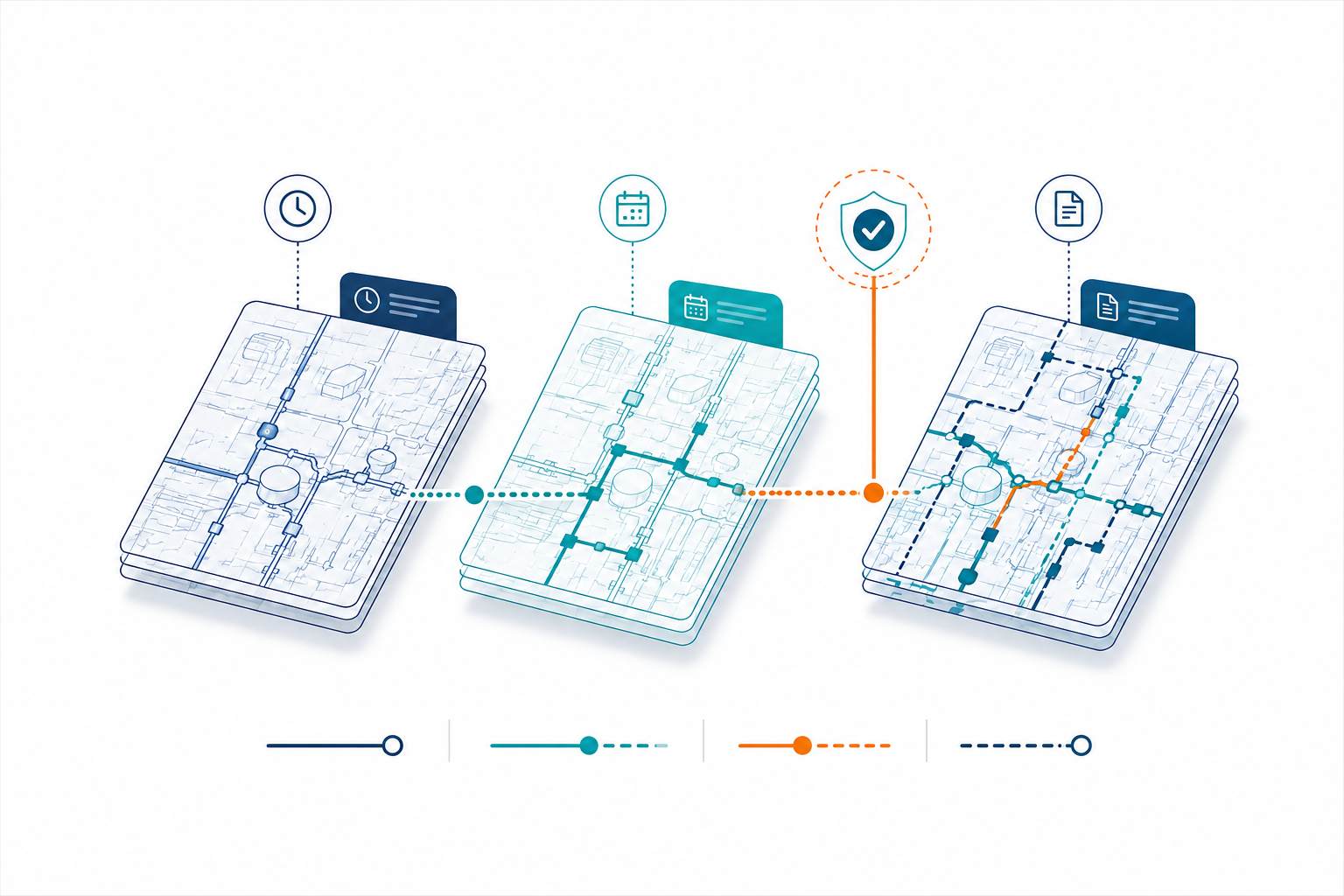
Several records exist across the system’s history, each accurate for what it was created to document, but never reconciled into one governing picture:
| Layer | Source | Update cadence | Confidence |
|---|---|---|---|
| Original main design | Engineering records at installation | Static | Accurate for the system as originally built |
| Regulator sensing line addition | Separate project, years later | One-time, undocumented back to base records | Accurate in isolation, not linked to the main’s primary record |
| Construction work package | Drafted by engineer from available records | Per project | Only as complete as the records it was built from |
| Regulator station monitoring | Live pressure feed | Continuous | High, but only as good as its sensing input |
| GIS main and appurtenance inventory | Asset management system | Updated on confirmed change | Depends entirely on whether field changes get reported back |
No single record is wrong. The sensing-line addition was correctly documented when it happened. The problem is that nothing connected it to the base records a future project would draw from.
What Changed
The sensing lines were added years before this project, a legitimate, documented change at the time. What changes today is that an engineer, working entirely from correct-looking base records, drafts a plan that has no way of knowing those lines exist. The gap between the two records was always there; disconnecting the main is simply the moment it becomes consequential.
How Attashe Could Support the Decision
The work package is ready for approval. Two ways the disconnection plan gets finalized:
Path A: Reasoning is preserved.
The engineer, or an AI system cross-checking the work package against the asset’s full history in Attashe, surfaces a flag: this main segment carries active regulator sensing lines added in a later, documented project, with the reasoning for the tie-in attached. The plan is revised to relocate the sensing lines before the main is abandoned. Disconnection proceeds with pressure control uninterrupted.
Path B: Reasoning is lost.
The engineer, or the same AI system, drafting from the same base records, has nothing indicating the sensing lines exist. The work package is approved as originally written. When the main is disconnected, the sensing lines lose their pressure reference at the same instant, and the regulators receive no valid signal to control against.
The sensing lines had been correctly installed years earlier. Only the connection between that fact and today’s plan was never captured.
The Value of Captured Reasoning
- Links later changes back to the records they affect, so a downstream project doesn’t inherit a blind spot from an earlier one.
- Surfaces relevant history automatically during planning, instead of relying on whoever happens to remember a prior project.
- Distinguishes what’s on file from what’s actually true, closing the gap between a correct-looking record and a complete one.
- Gives new engineers and AI systems access to the same context a longtime employee would carry.